 Christianity has countless heroes of faith and saints. However, almost without exception, virtually none of these “best of Christians” tried to treat Jews with compassion and relate to them as to fellow human beings. They all condemned them to hell for not believing and worshiping Jesus, often looking the other way when Jews were mistreated and even slaughtered, although since Augustine Jewish lives were occasionally preserved as a “witness to their failures”. This is because Christians have always looked at the Jewish people through the greatly distorted lens of the New Testament. That text, as well as the accompanying Church dogma that has been built up on its foundation over the last two thousand years, have made Jews less than human in the eyes of a Christian, a veritable spawn of Satan himself (John 8:44).
Because of this it is exceedingly rare to find a Christian who, prior to the Holocaust (itself a culmination of European Christian antisemitism), truly tried to empathize with Jews, to see the world from their perspective. Few Christians proved able to shake off such a high degree of religious indoctrination, found in their own religious texts, against the people that birthed their god and savior. Indeed, when one reviews biographies and stories of most celebrated of Christian saints, people whose virtues Christians have come to admire the most, not a single one stands out as a friend of the Jewish people. Not one of them who had tried to be truly compassionate to the oppressed (by fellow Christians!) children of Israel and tried to understand them or help them, with virtually all of them speaking of Jews in most condemning of terms and looking the other way when Jews were maligned.
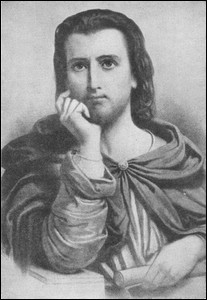
Except for one man – Peter Abelard, the great medieval French scholastic philosopher, theologian, logician and composer. For his thinking outside of the Christian box Abelard was virtually ostracized by Christian theologians, clergy and thinkers of his day. Yet, when it comes to the Jewish people, he refused to join their chorus.
In his work Dialogue Between a Philosopher, a Jew and a Christian Abelard, although still reflecting some of the effects of distorted Christian view of Judaism, offered this compassionate assessment of the Jewish people, putting the following words in the mouth of a Jewish protagonist.
I, along with you, have a common faith in the truth of the one God; I, perhaps, love him as much as you, and besides, I exhibit this love through works which you do not have. If these works are not useful, what harm do they me even if they were not commanded, since they were not forbidden? And who could censure me if I work more generously for the Lord, even if I am not bound by any precept? Who would censure this faith which . .. greatly commends the divine goodness and enkindles in us a great charity towards him who ls so solicitous for our salvation that he deigns to instruct us by a written Law? …
Whoever thinks that our persevering zeal, which puts up with so much, is without reward, affirms that God is most cruel. Surely, no people is known or even believed to have endured so much for God as we constantly put up with for him; and no one ought to claim that there can be any dross of sin which the furnace of this affliction has not burned away. Dispersed among all nations, alone, without an earthly king or prince, are we not burdened with such great demands that almost every day of our miserable lives we pay the debt of an intolerable ransom? In fact, we are judged deserving of such great contempt and hatred by all that anyone who inflicts some Injury on us believes it to be the greatest justice and the highest sacrifice offered to God. For they believe that the misfortune of such a great captivity has only fallen on us because of God’s supreme wrath, and they count as just vengeance whatever cruelty they visit on us, whether they be Christians or pagans …
Consider the kind of people among whom we wander in exile and in whose patronage we must have confidence! We entrust our lives to our greatest enemies and are compelled to believe in the faith of those without faith. Sleep itself, which brings the greatest rest and renews nature, disquiets us with such great worry that even while sleeping we can think of nothing but the danger that looms over our throats. No pathway except the path to heaven appears safe for those whose very dwelling place is dangerous. When we go to neighbouring places we hire a guard at no small price, in whom we have little confidence. The princes themselves who rule over us and for whose patronage we pay dearly desire our death all the more to such a degree that they then snatch away the more freely what we possess. Confined and constricted in this way as if tl1e whole world had conspired against us alone, it is a wonder that we are allowed to live. We are allowed to possess neither fields nor vineyards nor any landed estates because there is no one to protect them for us from open or occult attack. Consequently, the principal gain that is left us is that we sustain our lives here by lending money at interest to strangers; but just this makes us most hateful to them who think they are being oppressed by it. However, more than any tongue can do, our very situation is enough to speak more eloquently to all of the supreme misery of our lives and of the dangers in which we ceaselessly labour.
Peter Abelard was never canonized as a saint. When it comes to the Jewish people, however, perhaps he was the only pre-Holocaust Christian who was truly worthy of such an honor.


 Daily Minyan
Leave a comment