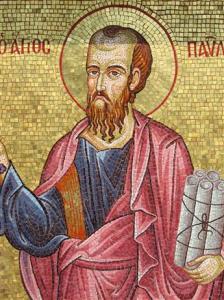
 The Book of Acts (or Acts of the Apostles) spends so much ink on the Christianity’s favorite apostle that it should more rightly be called “the Acts of Paul”. Christian tradition ascribes this work to Paul’s companion, Luke. Whether this was indeed the case we may never know. What is more clear, however, is that it was written by a Pauline apologist, closer to the end of the first century, many decades after the described events took place. Both Paul’s pre- and post-conversion life is presented in highly positive and exalted terms (despite mentioning that he was a maniacal persecutor of Jesus’ followers), while the lives of Jesus’ closest companions who knew Jesus personally, the twelve apostles, are barely given a mention.
For much of his gushing about Paul, the author of Acts, however, couldn’t avoid giving his readers a glimpse of how Paul may have been really viewed by the earliest community of Jewish followers of Jesus, the so called Jewish Christians who were still living in Jerusalem. Presumably this was because the conflict between them and Paul was both scandalous and well known in the first century. After all, Paul’s reputation in Jerusalem as a subverter of Torah almost resulted in him being lynched by the zealous worshipers gathered in the Temple, perhaps even Jewish Christians themselves. Luckily for Paul, he was able to use his status as a Roman citizen to have the Roman occupiers of the Jewish Land rush to his rescue to save him from Jews. It’s not the only time he relied on the Romans to save him, which no doubt didn’t endear him to the Jewish people.
To whitewash both the reputation that preceded Paul and the events that took place, the book of Acts dismisses the way the Jewish Christians of Jerusalem and diaspora viewed Paul’s reputed denigration of Torah as mere “rumors”. Instead, it claims many decades after the events took place, that the reports about Paul were without basis. The Jewish Christians were mistaken about both Paul and what he taught – what “they all heard” was wrong (despite the fact that this is exactly how Christianity came to interpret Paul’s teaching).
Thankfully, however, the Book of Acts is not the only evidence about Paul’s approach to Torah and Judaism we have in our possession. Although the Christian Church has destroyed most of the writings it deemed heretical, including those of Jewish Christians, other sources, including from well-known Church fathers, confirm for us that the earliest Jewish followers of Jesus viewed Paul as an apostate from Torah and Jewish traditions.
Let us take a look at a few examples. First from Iranius, a well known Church father who lived in 180 AD and was familiar with the early Jewish Christians, the Ebionites:
“Those who are called Ebionites agree that the world was made by God; but their opinions with respect to the Lord are similar to those of Cerinthus and Carpocrates. They use the Gospel according to Matthew only, and repudiate the Apostle Paul, maintaining that he was an apostate from the law. As to the prophetical writings, they endeavor to expound them in a somewhat singular manner: they practice circumcision, persevere in the observance of those customs which are enjoined by the law, and are so Judaic in their style of life, that they even adore Jerusalem as if it were the house of God.” (180 CE, Irenaeus, a Bishop from Gaul, Against Heresies 1.26.)
Eusebius, another famous Church father, had this to report about the Jewish Christians’ view of Paul:
“These men, moreover, thought that it was necessary to reject all the epistles of the apostle [Paul], whom they called an apostate from the law; and they used only the so-called Gospel according to the Hebrews and made small account of the rest.” (325 CE, Eusebius, Ecclesiastical History 3.27)
Some today, like the author who penned the book of Acts, have renewed attempts to whitewash the deeds of apostle Paul. However, they still have to contend with the tangible, not theoretical, results his teachings have had on how Christianity has come to view the Torah that G-d gave to Israel and how it came to treat Torah’s practitioners, the Jewish people. That can never be whitewashed.


 Daily Minyan
Leave a comment